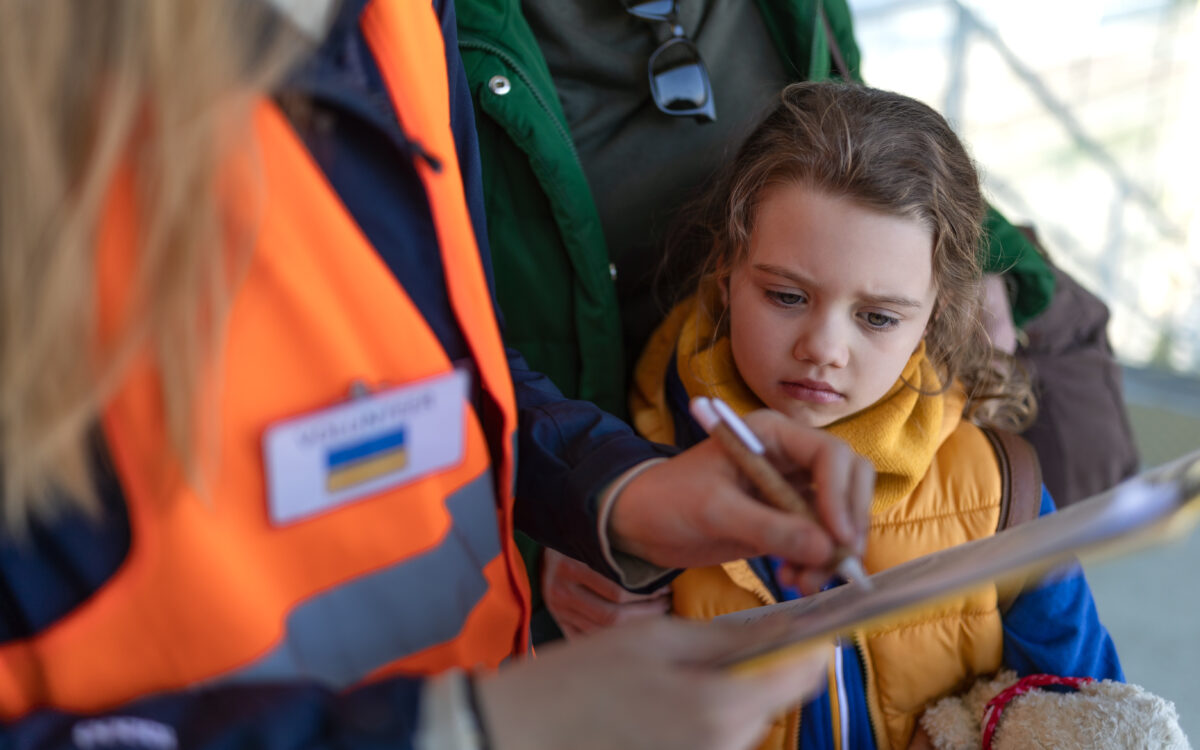
Since the full-scale invasion of Ukraine, international non-governmental organisations (INGOs) and humanitarian actors have confronted a growing array of operational, financial and structural obstacles that are making aid delivery increasingly difficult.
Access and security difficulties
With frontline hostilities still raging and missile strikes targeting infrastructure deep inside Ukraine, the operational environment remains extremely volatile. According to the United Nations Office for the Coordination of Humanitarian Affairs (UNOCHA), “humanitarian needs across Ukraine continue to deepen as intensified attacks cause multiple civilian casualties and drive new displacement.”
INGOs report that access is restricted not only by security risks (mining, shelling, damaged transport routes) but also by administrative and bureaucratic constraints in territories near or recently liberated from fighting.
Funding shortfalls and donor fatigue
A major challenge is the unpredictable and shrinking financing environment. Reports highlight that donors are becoming more cautious, and global humanitarian funding is under greater strain.
One critical gap is the relative under-funding of local organisations and the continued reliance on large INGO intermediaries. A review found that many Ukrainian national NGOs have matured and are capable of managing sizeable grants – yet donor policies still often favour large international organisations.
Localisation and coordination challenges
While the localisation of aid (shifting power and funding to local actors) is widely agreed to be advantageous, progress has been slow. A dedicated review in Ukraine found that although commitments were made to increase localisation, no clear timetable or strategy had been published.
This matters because local actors bring stronger legitimacy, local knowledge and often lower overhead cost. INGOs now face the challenge of rethinking long-term engagement and partnerships in Ukraine’s evolving humanitarian ecosystem.
Rapidly changing humanitarian needs
The nature of displacement, infrastructure destruction and civilian needs is evolving – rising internally displaced populations, mass refugee outflows, damage to homes, utilities and networks mean INGOs must adapt swiftly. For example, a newly published inter-agency analysis shows that while employment rates may be rising among Ukrainian refugees in neighbouring countries, wages remain low and economic vulnerability persists.
Moreover, humanitarian actors must plan for protracted crisis, not just emergency response – shifting from urgent relief to recovery, winterisation, housing, repair and psychosocial support.
Logistical and supply-chain disruptions
Delivering aid in a war-zone context means INGOs face higher costs, longer lead times, damaged infrastructure (roads, bridges, utilities) and rising security risks for personnel and assets. The combination of heavier logistics burdens, inflation and route disruptions is squeezing operational efficiency.
Political and regulatory risks
The war has introduced high levels of politicisation and regulatory complexity. Humanitarian actors must navigate sanctions regimes, export controls, security clearance processes and the blurring line between military, civilian and humanitarian support in Ukraine. These regulatory burdens increase compliance costs and slow delivery.
What lies ahead
INGOs operating in Ukraine will need to:
- Strengthen partnerships with trusted local organisations and shift more direct funding and decision-making capacity to them.
- Adapt to a funding climate where donors may prioritise defence over humanitarian budgets, meaning agile planning, diversified funding and cost-efficiency matter more than ever.
- Develop flexible operational models that can respond to changing front-line, infrastructure-damage and displacement patterns.
- Invest in risk management, staff safety and supply-chain resilience given the heightened security environment.
In short, the humanitarian response in Ukraine is entering a more complex, protracted phase. As donors reassess priorities and the conflict evolves, INGOs face multiple inter-linked challenges – from funding and access to localisation and security – that will test the sector’s ability to remain effective in one of Europe’s most difficult humanitarian theatres.